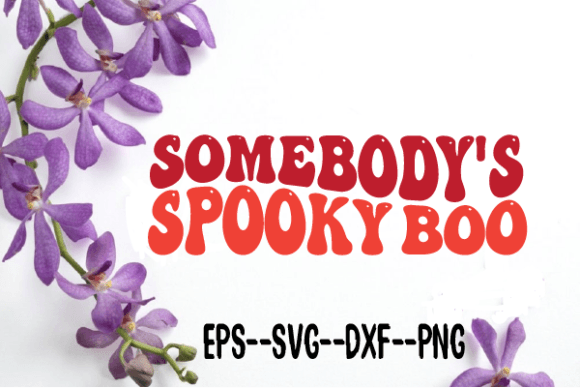
Somebody s Spooky Boo Wavy Svg Review
When I sit down to evaluate a new design file for my embroidery machine, I am rarely looking for perfection. I am looking for viability. Can this design hold up in the real world? Will it stitch cleanly without puckering? Does it translate well from a flat vector screen into a three-dimensional textile product? Today, I am putting Somebody s Spooky Boo Wavy Svg through that exact gauntlet. As a designer who frequently creates assets for small business owners and craft fair vendors, I need to know if this retro wavy sublimation design is ready for prime time in the realm of custom apparel and handmade gifts.
First Impressions and Visual Personality
The moment you load Somebody s Spooky Boo Wavy Svg, the aesthetic is immediately distinct. It leans heavily into a nostalgic, retro vibe with its undulating wave typography. The "Spooky Boo" theme suggests Halloween or autumnal decor, but the execution feels playful rather than frightening. This is not a horror-themed piece; it is a trendy, boutique-style graphic that appeals to a younger demographic or those who prefer subtle seasonal touches over loud, traditional scare tactics.
From a layout perspective, the wavy nature of the text introduces an immediate challenge for digitization. Unlike straight, blocky lettering, waves require careful attention to how the eye tracks across the design. In a machine embroidery design, this curvature can look incredibly dynamic on a sweatshirt embroidery project, creating a sense of movement that static text lacks. However, it also demands a precise understanding of stitch density to ensure the curves do not become jagged or loose during the stitching process.
Real-World Application: The Tote Bag Scenario
To truly test this design, let us imagine a practical scenario. You are preparing for a weekend craft fair, and you have decided to create a line of personalized gift items. Your bestseller has always been canvas tote bags. You decide to use Somebody s Spooky Boo Wavy Svg as the centerpiece for a fall collection.
Placing this design on a tote bag design requires strategic placement. Because of the wavy lines, centering the design on the front panel allows the curve to flow naturally with the shape of the bag. If you were to place it too high or too low, the wave might get cut off by the bag’s seams or handles. The retro style pairs exceptionally well with natural cotton or heavy-duty canvas, enhancing the handmade product feel. Customers at craft fairs are drawn to designs that look intentional and professionally finished. A clean, well-stitched wave pattern signals quality, whereas a sloppy execution would undermine the brand trust you are trying to build.
Technical Performance and Stitching Challenges
While the visual appeal is strong, we must address the technical realities of converting a sublimation-focused SVG into an embroidery file. The original description notes that this is a sublimation design provided in DXF and EPS formats. For embroidery, these files must be traced or digitized into stitches. Here is where the specific characteristics of the design matter.
Stitch Density: The wavy letters likely rely on fill stitches to create their solid appearance. If the stitch density is too high, the fabric may pucker, especially if you are using lighter materials like t-shirts or thin pillowcases. Conversely, if the density is too low, the underlying fabric color may show through, ruining the contrast. I recommend testing the design on scrap fabric first to dial in the correct thread tension and underlay settings.
Detail Level: The "Boo" elements often include small decorative accents, such as eyes or mouths. On a small hoop size, these tiny details can become muddy or merge together. If you are producing embroidered patches or caps, you must ensure that the smallest details remain distinguishable after stitching. For larger projects like kitchen towel decorations or large pillow covers, these details will render beautifully.
Fabric Texture: The retro wavy style looks best on smooth fabrics. On highly textured materials like chenille or thick fleece, the fine lines of the wave may get lost. For baby embroidery projects, such as onesies or burp cloths, this design works well because the soft curves complement the gentle nature of the products, provided you use a stabilizer that prevents stretching.
Where to Use Carefully
There are specific scenarios where Somebody s Spooky Boo Wavy Svg might struggle. Avoid using this design on curved surfaces like baseball caps unless you have a specialized cap frame and have pre-tested the distortion. The wave pattern can appear warped if the hoop does not lay the fabric perfectly flat. Additionally, be cautious when embroidering on dark fabrics with light threads; the contrast must be sharp, or the wavy edges may look fuzzy. Similarly, on stretchy knits, the lack of proper stabilizer support can lead to registration errors, where the start and end points of the wave do not align visually.
Impact on Product Value and Brand Consistency
For Etsy sellers and small shop product creators, the choice of design directly impacts perceived value. Somebody s Spooky Boo Wavy Svg carries a modern, trendy aesthetic that resonates with current market preferences. It feels less like a generic clip-art import and more like a curated design asset. When customers see a consistent style across your listings—whether it’s on mugs, pillow covers, or custom apparel—it builds brand recognition.
This design also enhances giftability. The playful "Spooky Boo" message is approachable and fun, making it an ideal choice for holiday gifts, teacher appreciation presents, or dorm room decor. The retro wave trend adds a layer of sophistication that elevates the item from a simple novelty to a stylish accessory. This distinction is crucial for justifying higher price points in the craft business.
Practical Designer Notes for Implementation
Before committing this design to production runs, I advise taking the following steps to ensure success:
- Test on Scrap Fabric: Always run a sample stitch-out. Check for thread breaks, tension issues, and how the fabric reacts to the needle penetration.
- Check Thread Color Contrast: The retro style relies on clear definition. Ensure your chosen thread colors provide enough contrast against your base fabric. Black thread on navy blue may lack the pop needed for the wave details.
- Review Stitch Density: Adjust the density settings in your digitizing software if necessary. Reduce density for lightweight fabrics to prevent puckering.
- Confirm Hoop Size: Verify that the final stitched dimensions fit comfortably within your standard hoop sizes. Oversized designs may require multi-hoop editing, which increases production time.
- Inspect Small Details: Zoom in on the digital mockup. Are the curves smooth? Do any paths overlap awkwardly? Fixing these issues digitally is far cheaper than fixing them in thread.
- Test Black and White Mockups: Convert the design to grayscale to check for balance. If one side of the wave looks heavier than the other, the design may feel unbalanced once stitched.
- Verify Licensing: Since this is sold as a digital product, confirm whether you have commercial rights to sell finished goods. This is critical for commercial embroidery projects.
Final Verdict
Somebody s Spooky Boo Wavy Svg is a versatile, aesthetically pleasing design that fits well within the Crafts and Graphics categories. It offers a modern twist on seasonal themes, making it suitable for a wide range of embroidery projects. From apparel decorators looking to refresh their fall collections to creative entrepreneurs seeking unique design assets, this file provides a solid foundation for profitable products. With careful attention to stitch quality and fabric selection, it can elevate your finished product lineup and delight customers who appreciate both nostalgia and contemporary style.