Habari Gani Kwanzaa Retro Wavy Svg Review
As a designer who spends more time than I care to admit staring at stitch density charts and testing thread tension, I approach every new digital asset with a healthy dose of skepticism. The market is flooded with generic clip art, but when something like the Habari Gani Kwanzaa Retro Wavy Svg lands in my inbox, I take notice. It promises a specific aesthetic—retro, celebratory, and culturally resonant—and comes bundled as a versatile graphic file set. But does it translate well from screen to needle? Can it hold up in a real-world commercial embroidery project, or is it just another pretty picture that falls apart under the hoop?
I recently put this design through its paces, imagining it for a variety of potential applications ranging from boutique holiday merchandise to personalized gifts. Here is my honest assessment of how this machine embroidery design concept performs when you move beyond the mockup and into actual production.
The First Impression: Mood and Visual Personality
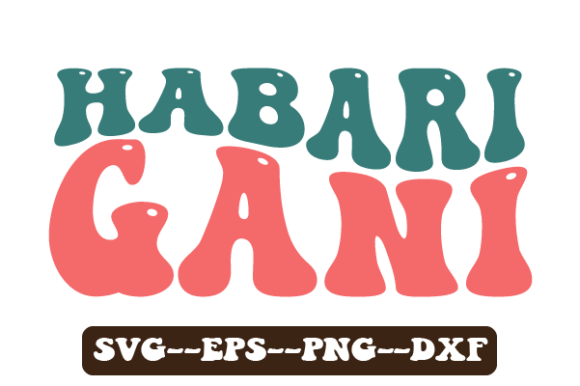
The moment you open the file, the retro wavy typography grabs your attention. "Habari Gani," meaning "How are you?" in Swahili, is a staple of Kwanzaa celebrations, and rendering it in a distorted, wavy font gives it a distinct 70s vibe. This isn’t just text; it’s a mood. For an Etsy seller or a small shop product creator, this visual personality is gold. It immediately signals warmth, community, and festive pride without needing excessive embellishment.
In terms of layout, the design feels balanced. It doesn’t scream for attention with chaotic elements; instead, it offers a clean, bold statement that works well as a focal point. When evaluating any embroidery file, I look for clarity. Does the eye know where to rest? With this design, the answer is yes. The curves guide the eye smoothly across the garment, making it ideal for chest placements on sweatshirt embroidery projects or centered layouts on tote bags. It feels professional, not amateurish, which is crucial for building customer trust in handmade goods.
Real-World Application: From Screen to Stitch
Let’s talk about where this design shines. I envision the Habari Gani Kwanzaa Retro Wavy Svg performing exceptionally well on sturdy fabrics. Picture a heavyweight cotton canvas tote bag design. The bold lines of the retro wave would stand out beautifully against natural beige or deep black fabric. Because the design relies on strong shapes rather than intricate micro-details, it translates cleanly to fill stitch techniques, provided the digitizer (or you, if you are converting it) pays attention to underlay stitches.
Another strong use case is holiday embroidery for home decor. Imagine this design embroidered onto a linen pillow cover or a thick kitchen towel. The wavy text adds a playful touch to what might otherwise be a traditional holiday item. It bridges the gap between cultural celebration and modern interior design. For a craft business looking to expand their inventory during the December rush, this is a low-risk, high-reward addition. It appeals to a broad audience seeking meaningful yet stylish decor.
However, we must consider the digital product sellers among us. Since the product includes DXF, EPS, and SVG files, it is also viable for sublimation and vinyl cutting. If you are creating printable mockups for clients who want a full-color gradient effect that embroidery cannot replicate, these vector files are essential. But for pure commercial embroidery, the limitation lies in the color palette. Embroidery threads are solid colors. To achieve the "retro" feel, you will need to rely heavily on thread colors and contrast. A vibrant red wave on a cream background will pop far more effectively than a subtle pastel-on-pastel combination.
Where to Exercise Caution
No design is perfect for every situation, and the Habari Gani Kwanzaa Retro Wavy Svg has its limitations. I strongly advise against using this on small hoop sizes. The wavy nature of the text requires enough space to breathe; cramming it into a tiny 4x4 inch area can result in muddled lettering where the curves merge together. If you are attempting a baby embroidery project on a onesie, ensure the design is scaled appropriately so the details remain legible.
Fabric choice is equally critical. Avoid thin, slippery, or highly textured fabrics. On a loose-weave linen or a stretchy synthetic blend, the stitch density required to make the wavy lines look smooth might cause puckering. Always test on scrap fabric first. Additionally, be mindful of dark fabrics. While dark backgrounds can look sleek, they require a white or light-colored underlay to prevent the thread colors from looking muddy. If you do not have a machine capable of precise color changes or multi-head setups, this could become a logistical headache.
Curved surfaces, such as caps or hats, present another challenge. The wavy baseline of the text may distort if not carefully mapped to the curvature of the hat front. It might look flat on a screen but appear stretched or compressed when stitched onto a rounded surface. For embroidered patch applications, this design works better on flat surfaces like jackets or backpacks where the fabric remains stable during stitching.
Practical Designer Notes for Execution
If you decide to incorporate this design into your workflow, here are some technical reminders to ensure success:
- Check Thread Contrast: Before loading your bobbins, verify that the chosen thread colors provide enough contrast against your base fabric. Low contrast kills the retro aesthetic.
- Review Stitch Density: Ensure the design is not too dense. Excessive density leads to bulkiness, especially in the thick parts of the wavy letters. Trim excess backing if necessary.
- Use Proper Stabilizer: A cut-away stabilizer is recommended for woven fabrics to prevent distortion over time, especially for items that will undergo frequent washing, like kitchen towels or aprons.
- Test in Black and White: Convert your design to grayscale in your editing software. This helps you see the true balance of negative space and solid areas, independent of color distractions.
- Confirm Licensing: As a graphic resource, check the license agreement. Are you allowed to sell finished physical products? Can you use it in design assets for other creators? Clarifying this protects your craft business from legal issues.
Final Verdict
The Habari Gani Kwanzaa Retro Wavy Svg is a strong contender for designers looking to add cultural depth and stylistic flair to their collections. It is not just a decorative element; it is a statement piece that resonates with customers seeking authentic, heartfelt gifts. Whether you are creating a personalized gift for a family gathering or stocking shelves for a craft fair, this design offers versatility and visual impact.
It excels in clear, bold applications on stable fabrics and thrives in contexts where its retro charm can be fully appreciated. By avoiding overly complex substrates and paying close attention to thread selection and stabilization, you can transform this digital file into a stunning finished product that stands out in a crowded marketplace. For the thoughtful maker, it is a valuable addition to any embroidery project library.